
Journal · Evergreen guide
10 Warm Lighting Ideas for a Calmer Home
Warm lighting is less about one perfect fixture and more about layering useful, low-glare light so the room can change gently from task time to rest.
The short answer
Start with one warm lamp at seated eye level, then add a second light where you read or work. Use shades to soften glare and keep the brightest light focused on the task.
Explore the lighting ideasContents · jump to a section
- Start with a shaded table lamp
- Use a wall light to soften blank corners
- Keep bedroom lighting low and warm
- Add candle glow, but keep it intentional
- Make task lighting feel cozy too
- Create a window-evening lighting moment
- Add a tiny accent lamp where the room feels flat
- Choose warm bulbs before buying new decor
- Let light touch texture, not just empty walls
- Create a softer path into the evening
- A simple warm lighting plan
- Lighting mistakes that make a room feel less calm
- Frequently asked questions
- Continue reading
01
Start with a shaded table lamp
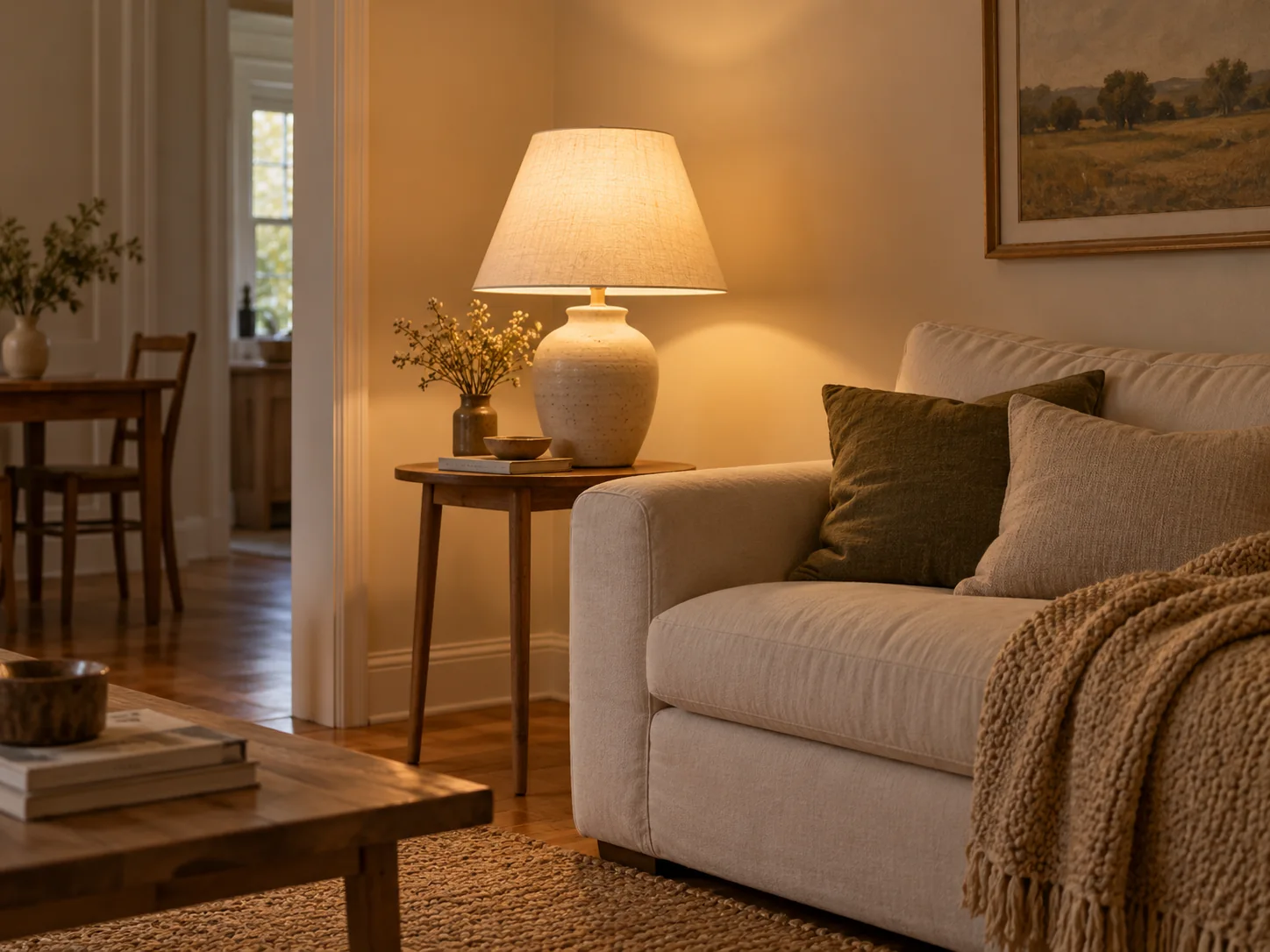
A shaded table lamp is one of the easiest ways to make a room feel warmer. Place it near a sofa, bed, desk, or reading chair so the light feels close to where you actually relax.
02
Use a wall light to soften blank corners
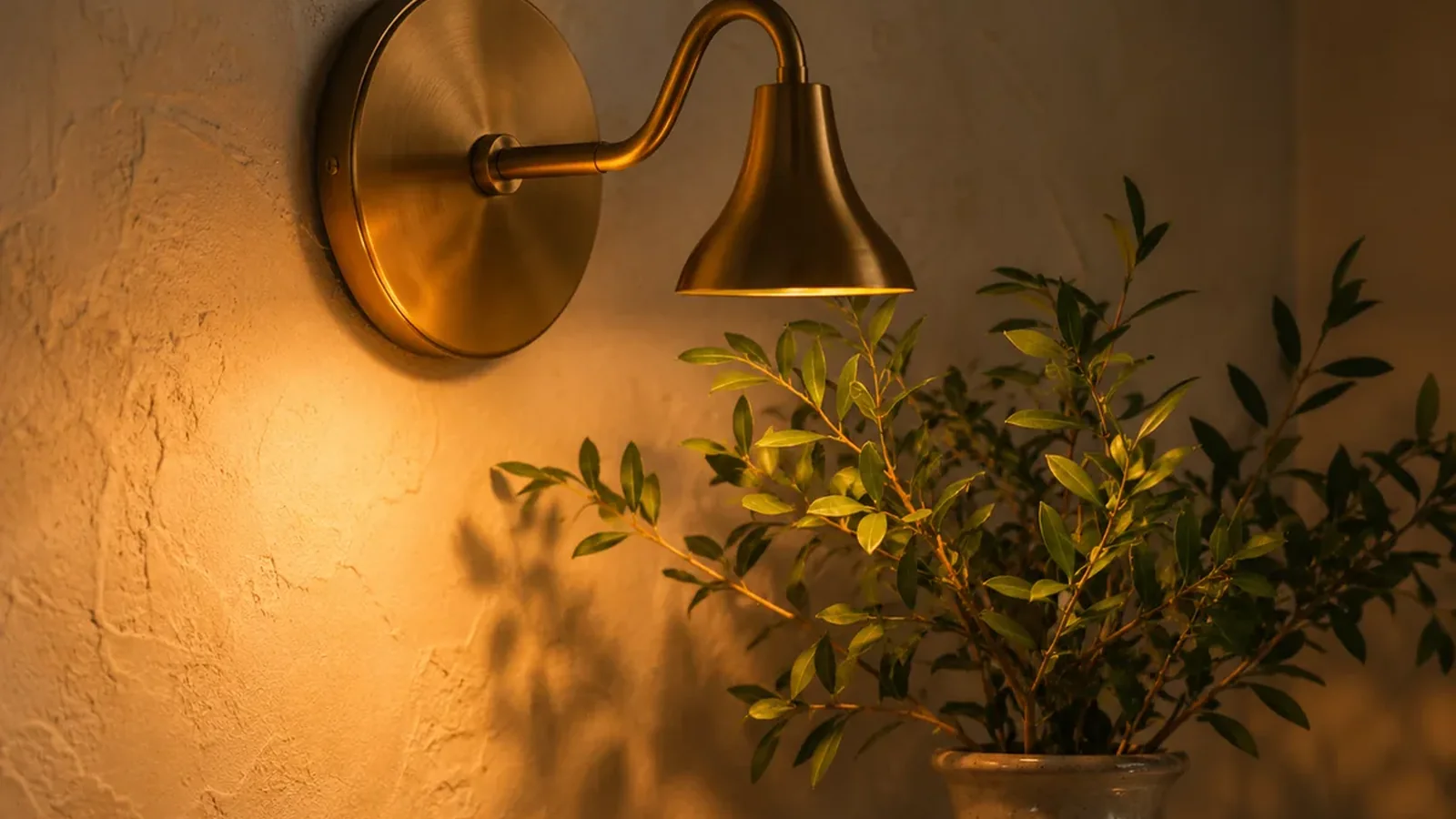
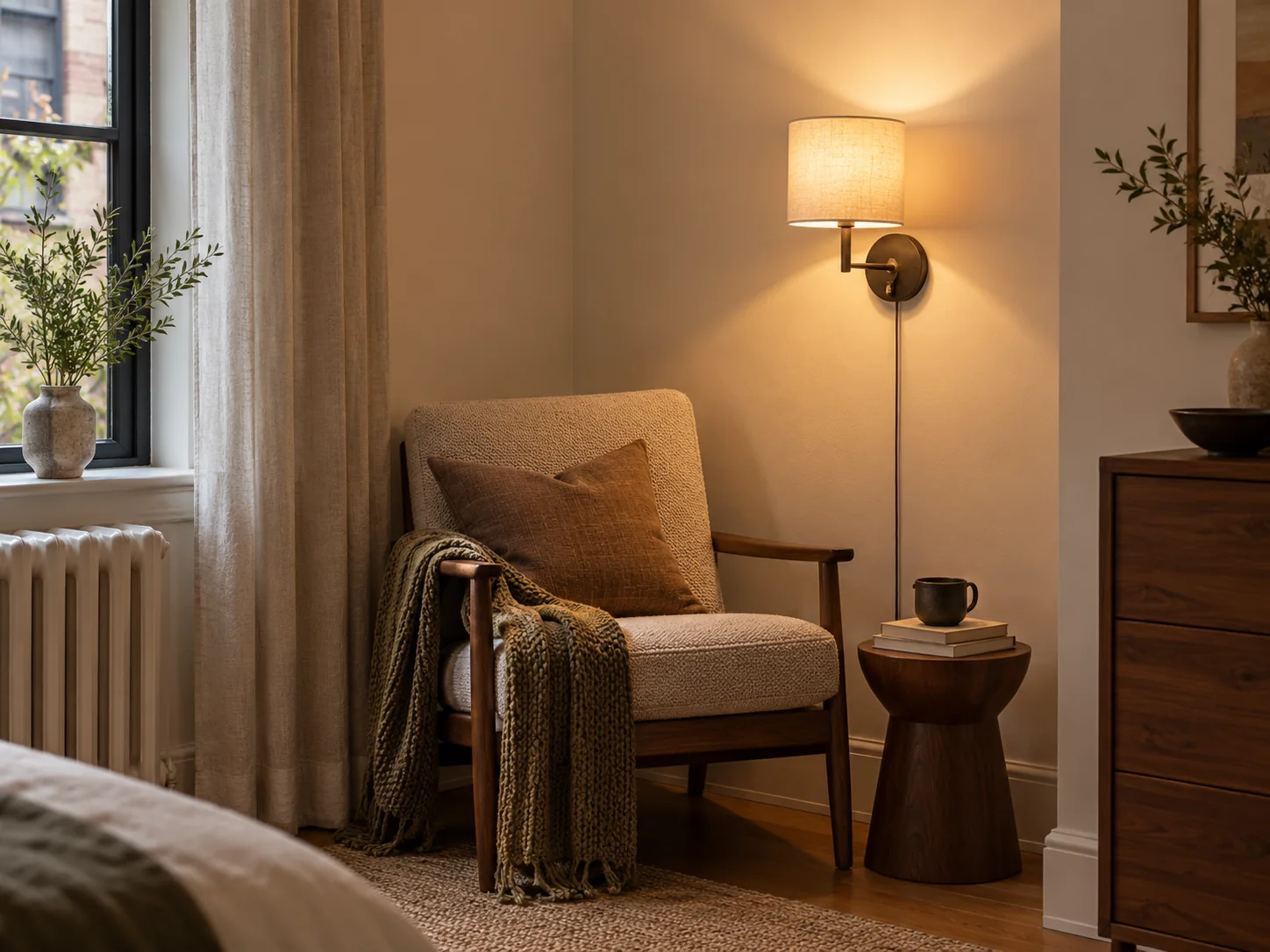
Wall lights work beautifully in small spaces because they add atmosphere without taking up table space. A warm sconce near a plant, framed print, or textured wall can make even a plain corner feel styled.
03
Keep bedroom lighting low and warm
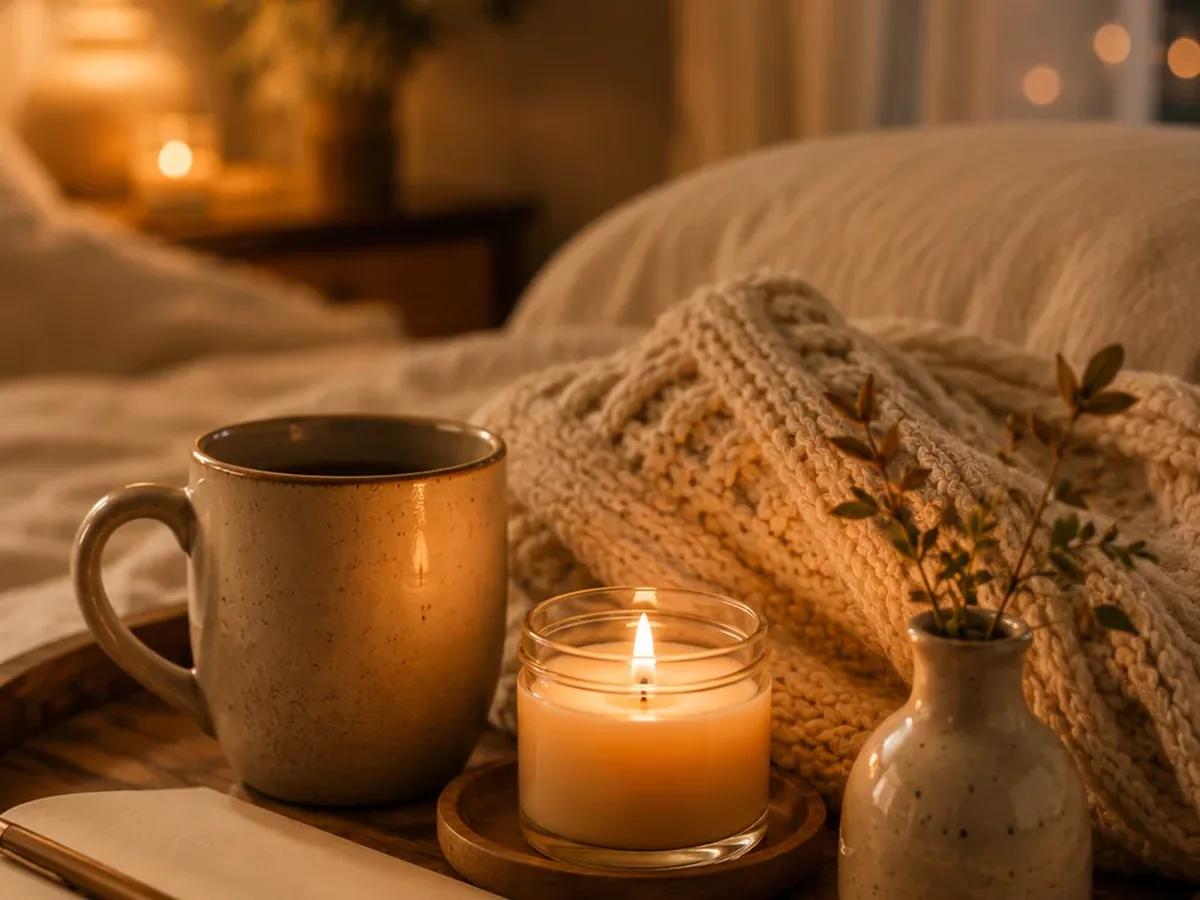
For bedrooms, calmer lighting means low placement and warm tone. A bedside lamp, soft curtain glow, and one small candle moment can help the room shift into rest mode.

04
Add candle glow, but keep it intentional
Candlelight can make a room feel instantly softer. Keep candles on a stable tray and use them as part of a small evening ritual rather than scattering them everywhere.
05
Make task lighting feel cozy too
A desk lamp does not have to feel harsh. Choose a warm bulb and angle the light toward your notebook or keyboard, not directly into your eyes. This keeps a workspace useful without breaking the cozy mood.

06
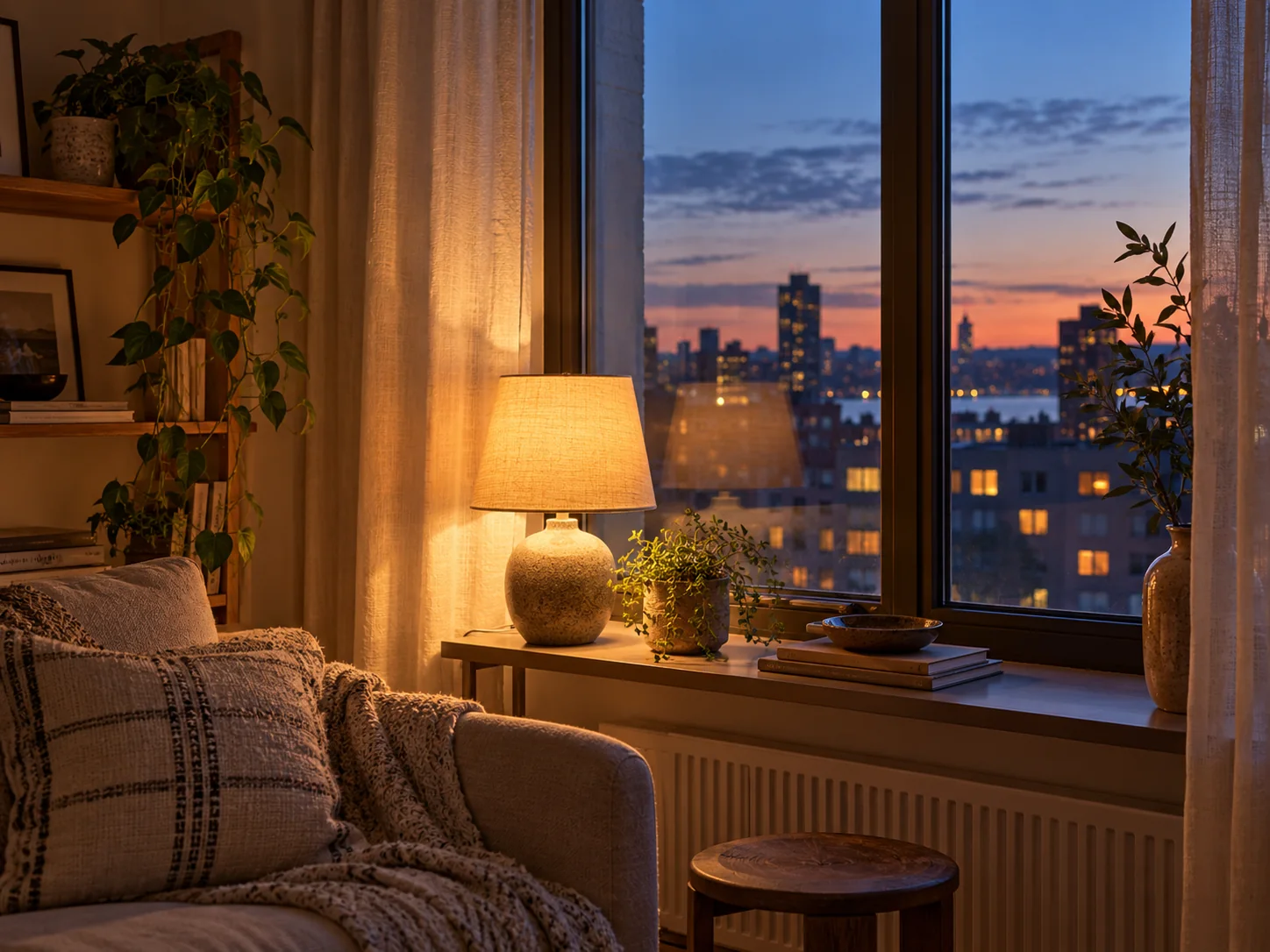
Create a window-evening lighting moment
At sunset, rooms can feel colder as daylight fades. Turn on one lamp before the room gets dark. This small habit keeps the transition into evening soft instead of sudden.
07
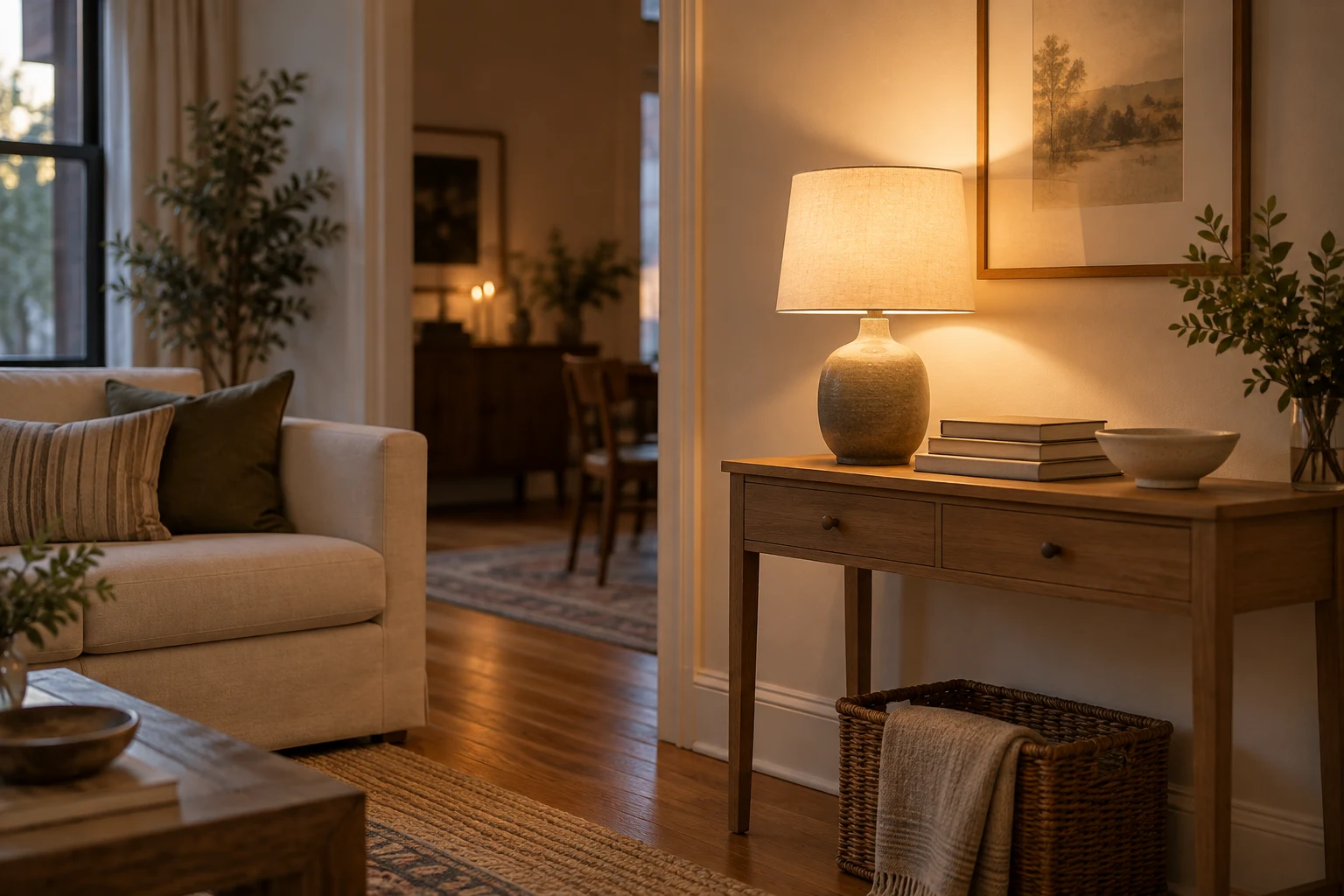
Add a tiny accent lamp where the room feels flat
A small accent lamp on a shelf, console, kitchen counter, or bookcase can make a room feel finished without adding clutter. This works especially well in dark corners that do not need strong task lighting.
Think of this as a soft glow rather than a main light source. The goal is to add depth, not brightness everywhere.
08
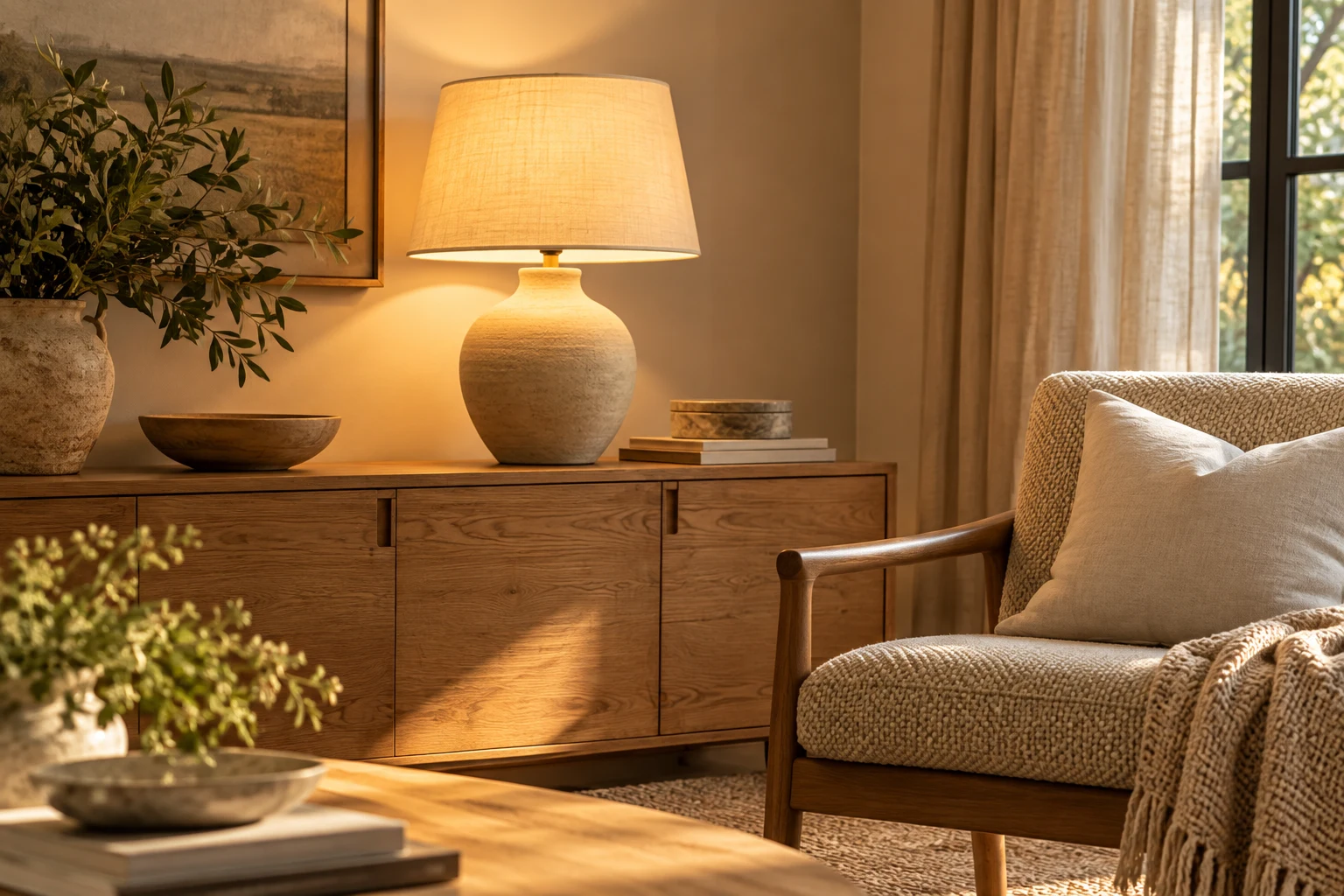
Choose warm bulbs before buying new decor
If a room feels cold, check the bulb color before replacing furniture, rugs, or wall art. Warm white bulbs usually make existing textures, wood tones, and neutral fabrics look softer.
For evening rooms, stay with a gentle warm tone and avoid mixing very cool white bulbs with cozy lamps in the same space.
09
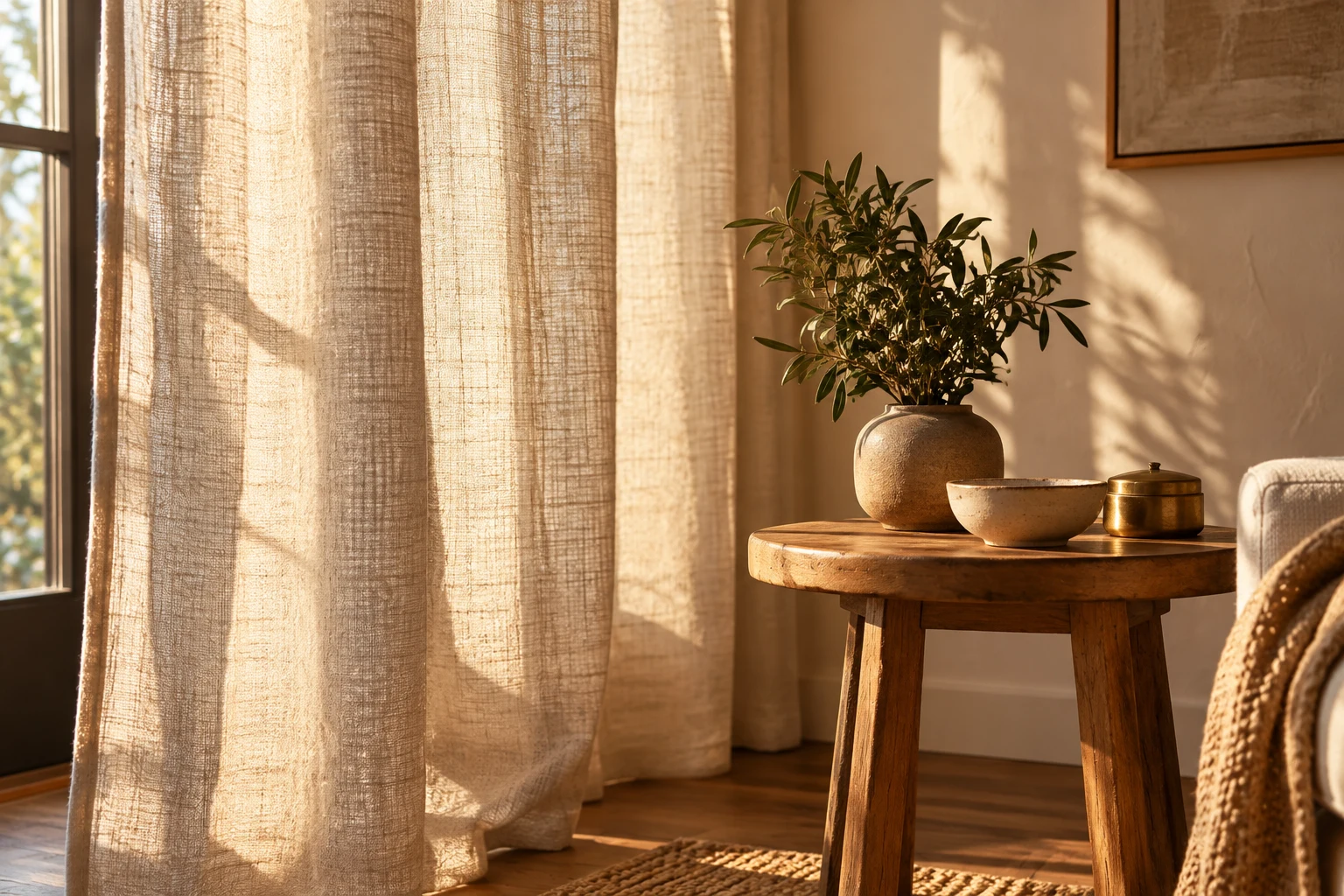
Let light touch texture, not just empty walls
Warm lighting looks richer when it falls on linen, woven baskets, curtains, wood, plants, art, or a textured wall. A lamp placed near texture creates gentle shadows and makes the room feel layered.
This is why a simple lamp beside a curtain, plant, or bookshelf can feel more inviting than the same lamp in an empty corner.
10
Create a softer path into the evening
A calmer home does not turn every light off at once. Create a small lighting path: one lamp in the living area, one softer light near the bedroom, and one low light near your evening routine zone.
This makes the transition toward sleep feel gradual. Pair it with The Evening Reset so lighting becomes part of a repeatable nightly rhythm.
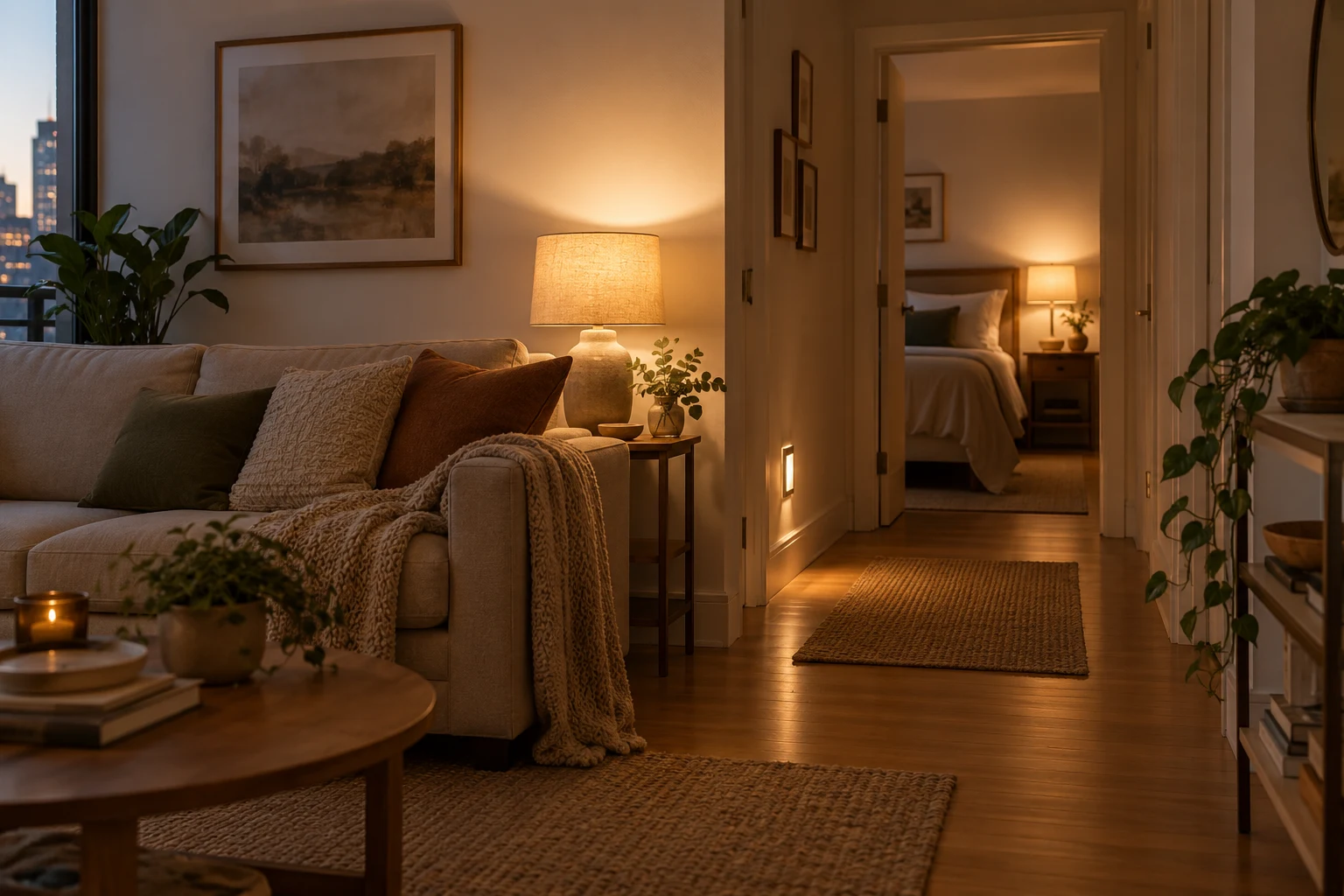
A simple warm lighting plan
One shaded lamp near the main seating area.
One smaller task lamp for reading, desk work, or journaling.
One accent glow: candle, sconce, or tiny lamp.
Warm bulbs instead of cool white bulbs.
Soft placement at eye level or lower when possible.
Lighting mistakes that make a room feel less calm
Avoid making the overhead ceiling light do all the work. Also avoid mixing very cool bulbs with warm lamps in the same room, because the contrast can make the space feel uneven.
When in doubt, reduce brightness first. A calm room rarely needs more light everywhere. It needs better light in the right places.
Questions from the guide
What color temperature is best for a calm home?
How many lamps should a cozy room have?
Are candles enough for warm lighting?
How can I make a room feel warmer without buying new furniture?
Continue reading
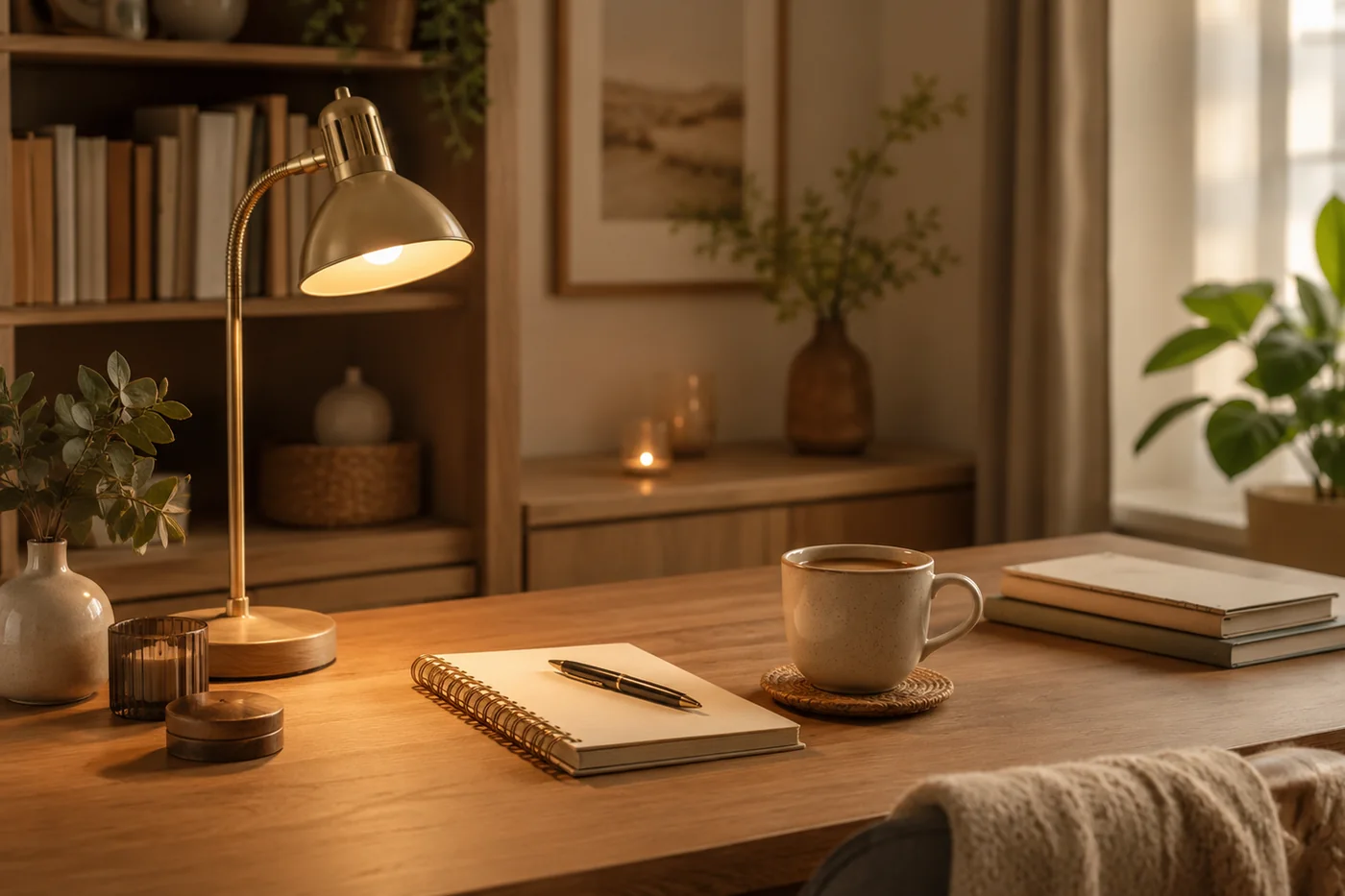
How to Create a Cozy Desk for a Calmer Workspace
A cozy desk works best when it supports focus first: warm light, useful objects, gentle storage, and a small reset that keeps the work surface clear.
Continue reading →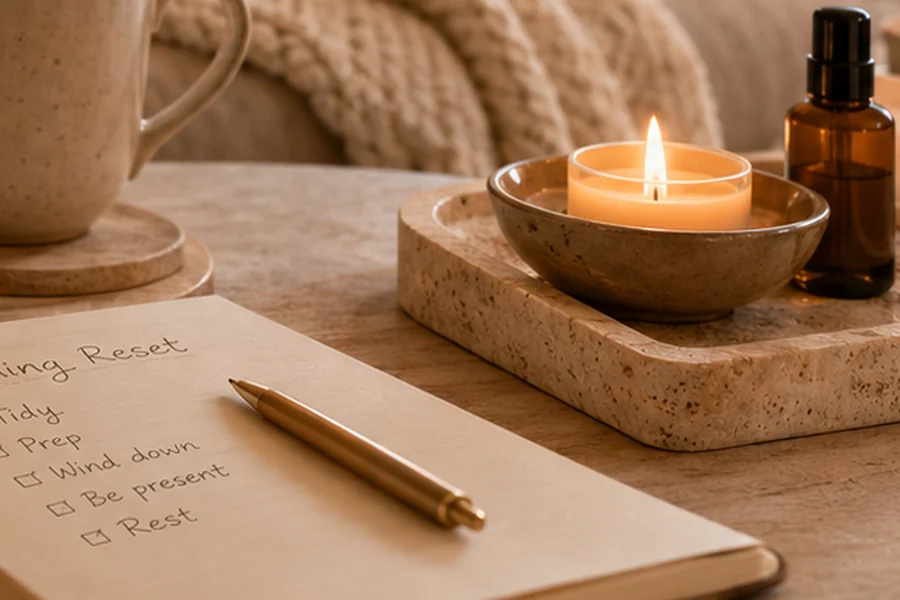
The Evening Reset: A Simple Routine for a Calmer Home
A short closing routine can make the room feel settled, soften the transition into rest, and reduce small points of friction for tomorrow.
Continue reading →