
Journal · Evergreen guide
How to Layer Bedding Like a Designer
A beautiful bed is not built from one expensive duvet. It comes from a calm formula: a smooth base, one soft middle layer, one relaxed top layer, balanced pillows, and a final texture that makes the room feel finished.

Quick answer: A beautiful bed is not built from one expensive duvet. It comes from a calm formula: a smooth base, one soft middle layer, one relaxed top layer, balanced pillows, and a final texture that makes the room feel finished.
Contents · jump to a section
- Start with a calm base layer
- Add a quilt or coverlet for structure
- Fold the duvet instead of spreading it flat
- Use a simple pillow formula
- Layer texture instead of many colors
- Let warm lighting finish the bed
- Store extra layers where they belong
- Adjust the layers by season
- Frequently asked questions
- Continue reading
01
Start with a calm base layer
The base layer sets the mood for the whole bed. Choose sheets in warm white, cream, oatmeal, soft beige, or muted taupe. These shades make the bed feel relaxed and give the other layers room to stand out.
A designer-looking bed usually does not need a loud pattern at the base. It needs a clean foundation that makes every layer above it feel intentional.

02
Add a quilt or coverlet for structure
The middle layer is what makes the bed look designed instead of flat. A quilt, coverlet, or lightweight blanket adds structure, pattern, and softness without making the bed too heavy.
Fold this layer neatly across the bed or pull it higher under the duvet for a hotel-inspired look. The goal is to create visible depth while keeping the bed easy to reset in the morning.

03
Fold the duvet instead of spreading it flat
A duvet can look heavy when it covers the entire bed in one flat block. Designers often fold it toward the lower third of the bed so the sheets, coverlet, and pillows remain visible.
This simple fold makes the bed look deeper and more inviting. It also keeps the upper part of the bed lighter, which can make a small bedroom feel less crowded.
04
Use a simple pillow formula
Pillows create height, but too many can make the bed hard to use. A calm formula works best for everyday bedrooms:
Two sleeping pillows in the back.
Two larger decorative pillows in front.
One smaller accent pillow if the bed still feels unfinished.
This gives the bed enough volume without creating a pile of pillows that needs to be removed every night.

05
Layer texture instead of many colors
If the bed feels plain, add texture before adding another color. Linen, cotton, waffle weave, matelassé, boucle, knit, and washed fabrics can make neutral bedding feel rich without becoming visually busy.
A good rule is to keep the colors quiet and let texture create the interest.

06
Let warm lighting finish the bed
Bedding looks softer when the bedroom lighting is warm and layered. A bedside lamp, low wall light, or small accent light can make the same bedding feel more expensive and restful.
For a deeper lighting plan, continue with 10 Warm Lighting Ideas for a Calmer Home or the Flow Cozy Living guide to warm smart lighting for sleep-friendly spaces.

07
Store extra layers where they belong
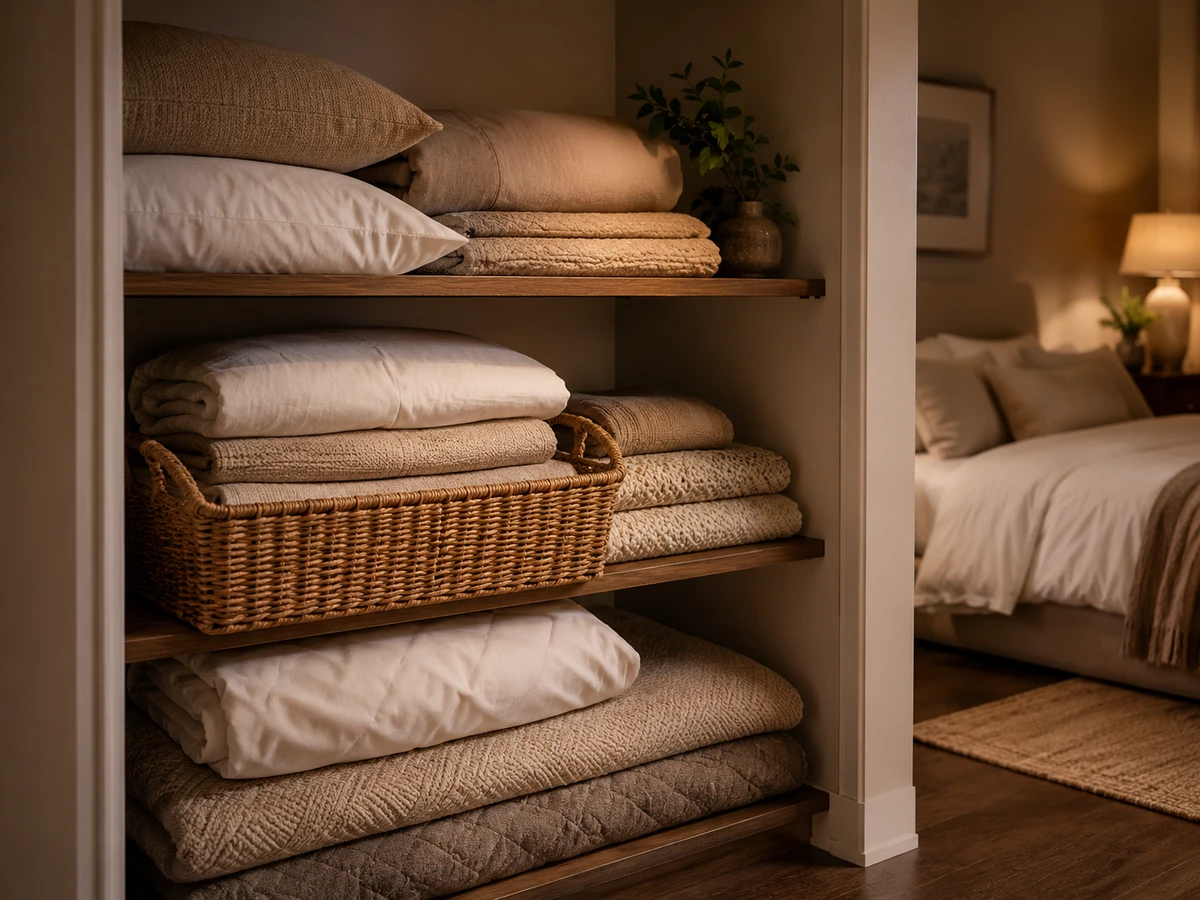
Layered bedding should not create clutter. If you use seasonal blankets, extra pillows, or guest bedding, give them a clear storage place. A lidded basket, linen bench, or closet shelf keeps the bedroom calm.
For smaller rooms, use the storage plan in Small Storage Changes That Make a Big Difference to keep extra textiles close but not visually overwhelming.
08
Adjust the layers by season
Designer bedding changes with the season without changing the whole room. In warmer months, keep the duvet lighter and let the coverlet show. In colder months, fold the duvet thicker and add one heavier throw.
Spring: soft cotton sheets, light quilt, one textured pillow.
Summer: breathable sheets, thin coverlet, no heavy throw.
Fall: warmer duvet, woven throw, deeper neutral tones.
Winter: heavier duvet, soft blanket, cozy bedside lighting.
Questions from the guide
What is the easiest way to layer bedding?
How many pillows should a layered bed have?
What colors make layered bedding look calm?
How do I make bedding cozy without too much clutter?
Continue reading

Reading Nook Essentials for Every Space
A cozy reading nook does not need a large room. It needs a comfortable seat, warm light, a surface for your book or tea, soft texture, and enough storage to keep the corner calm.
Continue reading →
Evening Reset: Simple Rituals for Better Rest
An evening reset is not a full cleaning routine. It is a soft closing ritual that helps the home feel calmer, makes tomorrow easier, and gives your mind a clearer signal that the day is ending.
Continue reading →