
Journal · Evergreen guide
The Evening Reset: A Simple Routine for a Calmer Home
A short closing routine can make the room feel settled, soften the transition into rest, and reduce small points of friction for tomorrow.
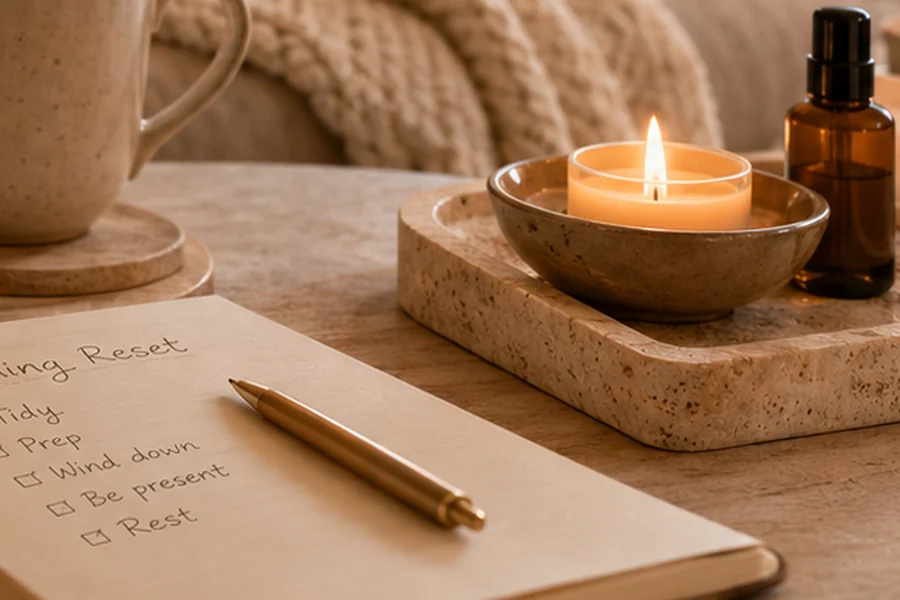
Quick answer: A short closing routine can make the room feel settled, soften the transition into rest, and reduce small points of friction for tomorrow.
01
Quick answer
An evening reset is a small closing ritual for your home. It helps you reduce visual noise before bed without trying to clean the whole house. Choose one surface, remove what does not belong, prepare one thing for tomorrow, and set a softer light.
02
The simple 4-step evening reset
1Clear one visible surfaceStart with a nightstand, coffee table, desk, vanity, or bathroom counter. Do not clean the whole room. Remove only what is distracting your eye.
2Set one warm lightTurn on a lamp, candle-safe LED, or warm sconce. This shifts the room from “tasks” to “rest” and makes the reset feel softer.
3Prepare one thing for tomorrowSet out a notebook, fold a throw, fill a water glass, or place one item near the door. Keep it tiny enough that you can do it even when you are tired.
4Close the day with a short noteWrite one line: what is done, what can wait, and one small intention for tomorrow. The goal is closure, not perfection.
03
Why warm light matters
Evening routines are easier when the room gives you a cue. A warm lamp near a reading chair, a candle on a tray, or a low bedside light can make the same space feel calmer without buying many new things.
For a deeper lighting path, continue with 10 Warm Lighting Ideas for a Calmer Home. For now, keep the recommendation practical: choose soft, low, warm light before adding more decor.
04
How to use it tonight
Pick one room or one corner only.
Set a timer for ten minutes.
Clear one visible surface.
Turn on one warm light.
Write one line before bed: “Tomorrow can start softer because…”
When you are ready to make the space feel more intentional, continue with Cozy Desk Ideas for a Calmer Workspace, or browse the Journal for the next guide.
Questions from the guide
What is an evening reset?
How long should an evening reset take?
What should I include in a simple evening reset?
Can an evening reset help if my home is small or cluttered?
Continue reading

Evening Reset: Simple Rituals for Better Rest
An evening reset is not a full cleaning routine. It is a soft closing ritual that helps the home feel calmer, makes tomorrow easier, and gives your mind a clearer signal that the day is ending.
Continue reading →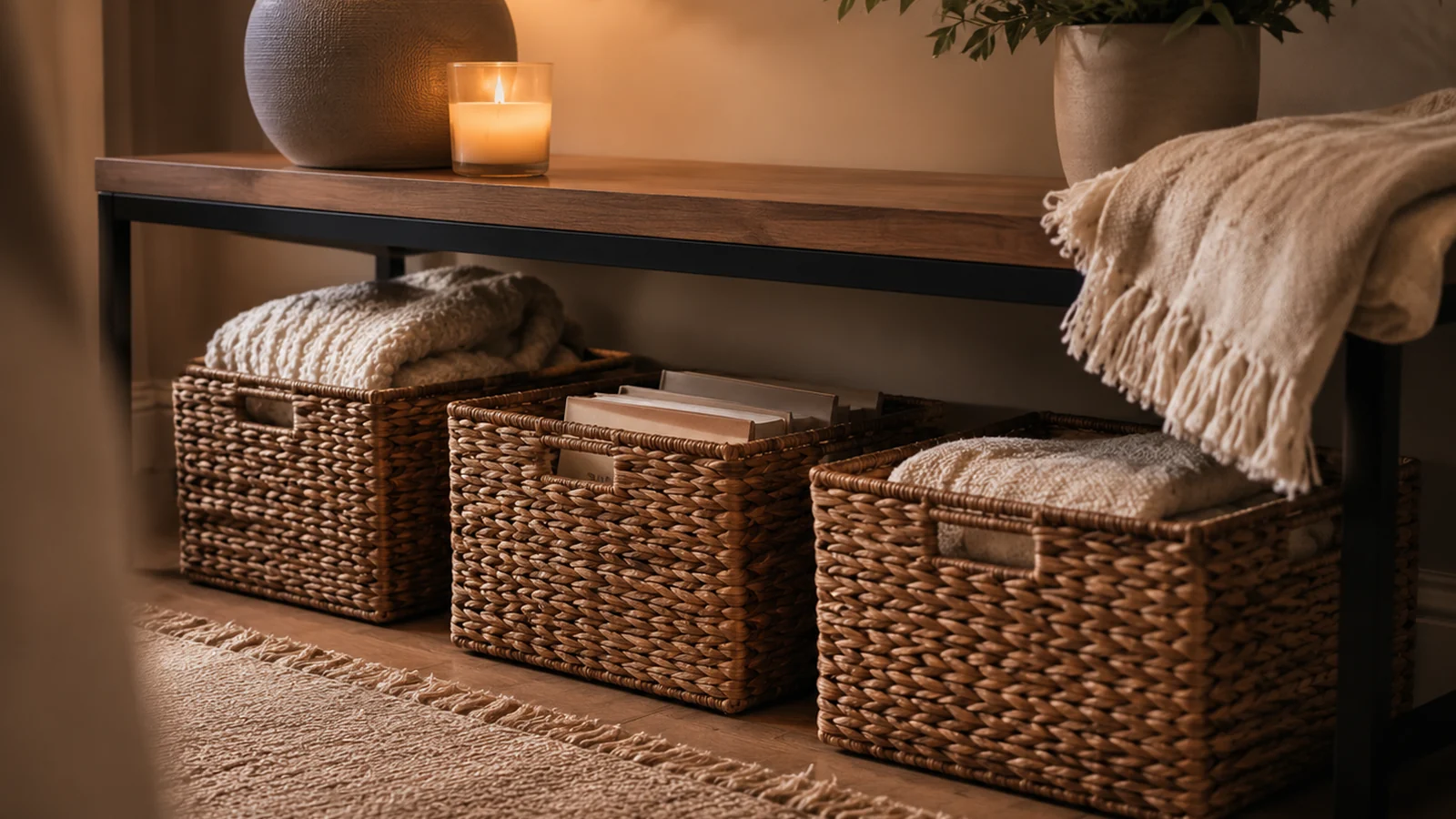
Small Storage Changes That Make a Big Difference
A calmer home does not always need more furniture. Sometimes the biggest change comes from one basket, one tray, one shelf, and a better place for the things you use every day.
Continue reading →